What if the smartest business move you make this decade isn’t in Silicon Valley, Singapore, or Dubai, but is actually in Vietnam?
Living and Working in Vietnam: Costs, Cities, and Legal Essentials for Entrepreneurs

Every generation has its migration story. In the 1980s, innovators left corporate corridors for California garages and Silicon Valley. In the 2000s, it was the industrial opportunities in China. Today, a quieter shift is well underway: entrepreneurs, investors, and founders are looking at Vietnam, drawn by a mix of affordability, and ambition.
Vietnam doesn’t flaunt its rise. Walk through Ho Chi Minh City at dusk and you’ll see café tables lit by laptop screens, co-working spaces busy past midnight, and conversations that move easily between English and Vietnamese. That is what living and working in Vietnam looks like now.
What makes Vietnam compelling isn’t just its low costs or high growth, it’s the trajectory. A young, educated population. A government courting investors. A business culture that feels scrappy yet optimistic. For those willing to adapt, this is Southeast Asia’s tipping point, where ideas, capital, and courage still have room to multiply.
1. Why Vietnam Is the Next Big Move for Entrepreneurs

Vietnam today is where Thailand stood a generation ago, only more connected, more ambitious, and far more digital. The country’s GDP growth was 7.1% in 2024 and an estimated 8.0% in 2025, still near 8% in early 2026, foreign investment keeps flowing (about USD 27.6 billion in FDI in 2025, up 9% year on year), and global companies from Samsung to Apple continue to diversify operations here.GDP growth consistently tops 6 to 7%, foreign investment is surging, and global companies from Samsung to Apple are diversifying operations here.
But what really sets Vietnam apart is its mix of economic freedom and livability. Internet speeds rival Singapore’s. Co-working spaces buzz with both local and international founders. English is widespread in business districts, and the startup ecosystem is fueled by an educated, young workforce.
Top reasons Vietnam is becoming a business magnet:
- Strategic location between China and ASEAN markets
- Vietnam’s economic growth is among the world’s fastest
- Rapidly improving infrastructure and logistics networks
- Tax-friendly policies for investors in technology, manufacturing, and services
- Affordable talent: educated, optimistic, and entrepreneurial
- Low operational and living costs give you leverage
Read more about why it makes sense to invest in Vietnam
2. Cost of Living in Vietnam: Reality Check for Foreigners

To build a sustainable base, you need to know how much you’ll spend, not just how much you earn. In this section, I’ll break down living costs in major cities and what your budget really needs to cover. Treat the figures below as ballpark ranges rather than quotes: central-district rents and prices drift upward, so verify with current listings before you budget.
Rent & Housing
- In Ho Chi Minh City (HCMC), a decent 1-bedroom apartment in a good district might run $350 to $1,200/month, depending on amenities and location.
- In Hanoi, similar apartments tend to fall between $300 to $700/month.
- In Da Nang, expect $250 to $600/month for 1-bed units.
- Utilities and internet: typically $70 to $90/month in mid-tier places.
Food, Transport & Daily Life
- Street or local-style meals normally cost $4 to $6. A mid-range dinner for two might reach $25.
- Motorbike fuel: around $3 to $4/week.
- Taxis or rideshares (Grab etc.): $0.50 to $0.70/km in urban areas.
- Healthcare: Vietnam has international-grade hospitals (especially in HCMC, Hanoi, Da Nang). You can get excellent services at a fraction of U.S./Western Europe prices.
Real Work-Life Balance
Because here’s the twist: the lower your costs, the more freedom you have. Imagine reinvesting savings into sales, product, or talent, instead of sanding margins with inflated local overhead. Many foreign professionals and freelancers with monthly salaries of $2,000 to $5,000 (or more) find their dollar stretches further, so long as they avoid unsustainable splurges. If you’re finding it difficult to live comfortably with a budget over that, then you’re doing something that you might want to look at a bit closer.
3. Best Cities in Vietnam for Entrepreneurs and Expats

Let’s step into your decision-making shoes. You’re choosing between energy, scale, regulatory ease, quality of life, or coastal calm. Here are the best cities in Vietnam and what each offers for business-minded residents.
Ho Chi Minh City (Saigon)
- Why live there: It’s Vietnam’s financial and commercial powerhouse. You’ll find the densest network of co-working spaces, investors, service firms, and expat communities.
- Considerations: Traffic, cost, and getting lost in the crowd of competitors.
- Best for: trading, supply chain operations, B2B services, startups.
Hanoi
- Why live there: A political and cultural hub. Great for firms that need government connections, policy alignment, or want to sit in the national capital.
- Considerations: Some regulatory burdens may lag behind HCMC in flexibility.
- Best for: consultancies, corporate offices, regional HQ.
Da Nang
- Why live there: The rising star. As Vietnam builds smart-city infrastructure, Da Nang attracts tech, outsourcing, and lifestyle-centric ventures.
- Considerations: Still fewer big-name clients locally (yet).
- Best for: remote firms, tech hubs, balanced work-life models.
Secondary & Niche Cities
- Hoi An / Nha Trang / Hue: Attractive for creative, tourism, wellness, and hospitality projects.
- Phu Quoc, Vung Tau: For island/resort investments, coastal development, or logistics-centered operations.
Quick decision map:
| Goal / Priority | Suggested City |
| Access to capital, trade networks | HCMC |
| Government relations, policy | Hanoi |
| Balanced growth & lifestyle | Da Nang |
| Tourism or niche creative business | Hoi An, Nha Trang |
| Resort / coastal investment | Phu Quoc, Vung Tau |
The key: choose the city that aligns with your business model, not the one everyone says is “cool.”
4. Legal Essentials: Vietnam Work Permit and TRC (Temporary Residence Card)
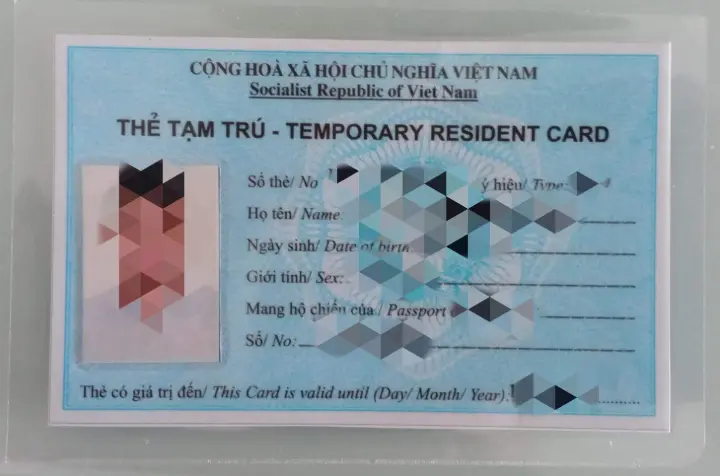
Even a brilliant business fails if it’s built on unstable legal ground. This section is your blueprint for how foreigners legally live and operate in Vietnam. Think of it as your foundation. If you build on sand, everything collapses.
Work Permit
- Purpose: Legally formalizes your ability to work in Vietnam under a business or employment contract.
- Issuer: Department of Labor, Invalids and Social Affairs (DOLISA).
- Duration: Usually 1 to 2 years.
- Requirements:
• Your Vietnamese entity must exist (e.g. company registration), and/or
• A valid labor contract
• Qualifications or proof of expertise
• Health check and criminal background check
• Valid visa (can be converted or extended)
Without a work permit, you risk penalties, deportation, or restrictions on your corporate operations.
Some cases qualify for a work permit exemption – intra-company transferees, short technical or training assignments, and a few other categories – but the exemption must still be confirmed in writing by DOLISA before the person starts work. Never assume an exemption applies.
Temporary Residence Card (TRC)
- Purpose: Allows you to stay long-term without repeated visa renewals.
- Issuer: Immigration Department under the Ministry of Public Security.
- Duration: 2 to 3 years is common; in heavy investment cases, up to 10 years possible.
- Eligibility routes:
• Work permit holders
• Investors meeting capital thresholds
• Spouse of a Vietnamese citizen or dependent family
• Senior management in Vietnamese entity
Major benefits of a TRC:
- Enter and exit Vietnam freely without re-applying for visas
- Lease or register property (subject to rules)
- Sponsor spouse / children
- Lower administrative friction
Process tip: In practice, many entrepreneurs first get a work permit or investor visa, then apply for TRC under corporate sponsorship. The TRC application (with submitted documents in order) often completes in 5 working days in cities like HCMC or Hanoi (if no complications).
Wanna know more about processing a TRC and Work Permit for Vietnam? Look no further
5. Business Entry Strategies for Foreign Entrepreneurs

You can’t just arrive and open shop. There are routes, each with pros and trade-offs. This section lays out the pathways, so you know which suits your ambition.
Investor Visas (DT class)
- DT1 to DT4 visas cater to foreign investors and vary by capital contribution and investment value (side note: Vietnam sets no minimum capital for many industries)
- If you inject foreign capital into a Vietnamese company (or branch), these visas give you legal standing to both manage operations and stay long term
- They often facilitate a smoother transition into TRC status for you and your dependents
- Possible to buy into an existing company as a new investor
Register a Vietnamese Entity
- Foreign-Invested Enterprise (FIE): You can also setup your own wholly foreign owned company (and still get the DT visa)
- Representative Office: More limited in permitted business scope (revenue not allowed, but suitable for market research, and good for understanding the market before full establishment)
- Once registered, your company can sponsor your work permit and TRC.
EOR / Service Providers
- Some entrepreneurs use an Employer of Record (EOR) service. The EOR legally employs you locally while you test the market before fully committing.
- This approach reduces legal risk in the early phase but often costs more per employee and gives you less direct entity control.
Compliance, charter capital, and license scopes
- You’ll need to define a business scope that aligns with permitted foreign investment fields.
- Office lease, registered address, charter capital, and local licenses are part of the foundational compliance package.
- Ensure your business scope leaves room for expansion (e.g., export, consulting, digital products) so you don’t trap yourself in narrow operations.
- Charter capital and the investment capital on the IRC are separate registered figures – keep them consistent, since banks and tax authorities check against both.
- Conditional business lines (education, logistics, food, healthcare, and others) need sub-licenses or practice certificates on top of the ERC. Budget time for those before you promise a launch date.
6. Building a Sustainable Life Around Your Company in Vietnam

You’re no tourist. You’re here for business! (and maybe fun, too). But to thrive, you need systems built for sustainability: healthcare that protects you, banking that connects you, housing that grounds you, and relationships that unlock the invisible side of business in Vietnam.
Healthcare & Insurance
- Invest in international health insurance or subscribe to premium service providers (e.g., FV Hospital in HCMC, Vinmec).
- Routine checkups, emergency care, and specialist treatment are remarkably affordable compared to Western alternatives.
Vietnam has a pretty sturdy public healthcare and social insurance, but in case you’re looking for something even better, drop us a note. We know some good international private insurance policies.
Banking & Finance
- Local banks (Vietcombank, BIDV, Techcombank) often offer foreigner accounts.
- International banks like HSBC, Standard Chartered also operate in HCMC or Hanoi.
- Use local accounts for smooth operations (salary payments, supplier payments, local taxes).
- Personal account opening typically requires a passport, a visa or TRC, and proof of address; corporate accounts follow the charter and registered signatories.
Housing & Real Estate
- Foreigners can lease freely; full property ownership is restricted, but 50-year renewable leaseholds are allowed.
- When choosing a residence, prioritize proximity to infrastructure (malls, offices, transport) over scenic peripheries that may lack daily convenience.
- Budget for a deposit of one to two months plus possible agent fees when you sign a lease.
Networking & Ecosystem
- Join local Chambers of Commerce (AmCham, EuroCham, etc.).
- Use co-working spaces (Toong, The Hive, Up, CirCO) to stay plugged into community trends.
- Attend startup events, conferences, and local pitch days. Relationships in Vietnam often unlock access before raw metrics do.
Taxes & Compliance
- Personal income tax: tiers from 5% to 30%; non-residents are typically capped at 20%.
- Corporate taxes and incentives: Dependent on location, industry, and incentives for specific zones or sectors.
- Always engage a local, reputable accounting and legal partner. The risks and penalties of non-compliance are far higher than the marginal cost of good advice.
7. Why Vietnam May Be the Strategic Leap You Didn’t Expect

Vietnam sits at a sweet intersection: affordable yet sophisticated, emerging yet stable, local yet global. For entrepreneurs who can navigate early bureaucracy, the upside is enormous. The next few years are the window: early entrants capture opportunities that latecomers will pay a premium for.
Why the timing matters:
-
- Early movers get access to suppliers, partners, and talent that later entrants will pay premiums for.
- Government policy is pro-investment especially in manufacturing, green energy, digital transformation, and startups.
- Foreign founders are welcome provided you follow proper licensing and residency steps.
- Infrastructure is catching up fast with new metro lines, highways, ports, and fiber networks that are changing what’s possible outside the main hubs.
Practical steps before you decide:
-
- Visit for a month and work remotely from Ho Chi Minh City, Hanoi, and Da Nang to get a feel for each city’s tempo. This is a very serious piece of advice. I’ve done it myself.
- Talk to local lawyers and accountants early; good advice saves months of frustration.
- Register your company or set up a representative office once you’ve found your base.
- Build relationships before you need them. Most deals in Vietnam start with trust, not contracts.
Vietnam rewards action. Show up, be consistent, and the market will start opening doors that aren’t visible on paper.
Conclusion
If you’ve read this far, you already know: moving to Vietnam is not a gamble. It’s a strategic lever. But the leverage comes only with planning and well-managed expectations.
United Consulting is here to help entrepreneurs like you become legal, operational, and be growth-ready in Vietnam. From visa and TRC navigation to full company setup and compliance, we do the heavy lifting so you can focus on what you do best: building.
👉 Contact us today. Let us help you make Vietnam the launchpad, not just a stopover.